


Oracle in Cryptocurrency
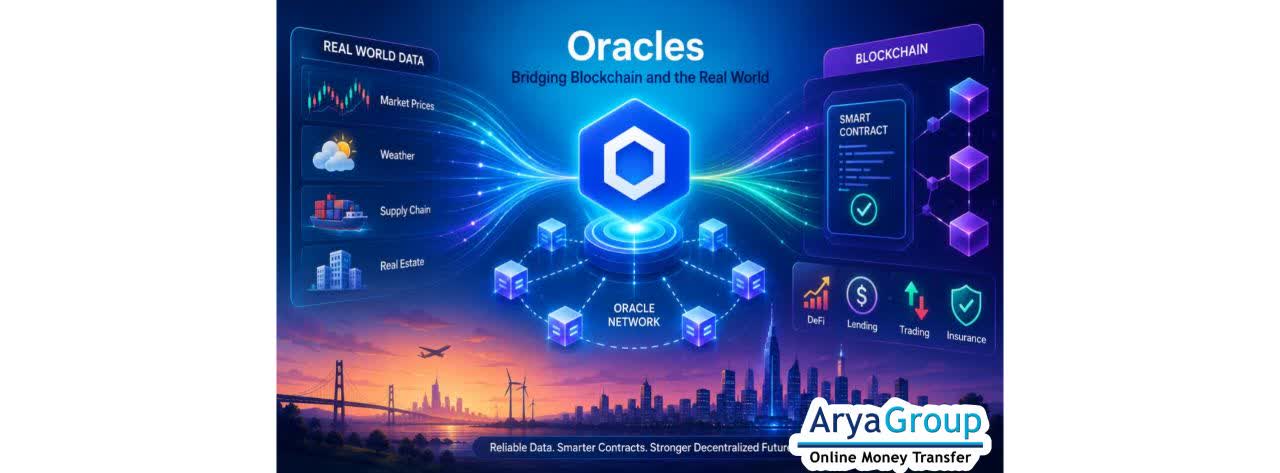
Introduction: Understanding the Role of Oracles in Blockchain
Blockchain technology has transformed the way people think about digital ownership, financial systems, and decentralized applications. By providing secure, transparent, and decentralized networks, blockchains have created new possibilities in areas such as finance, gaming, supply chains, and digital identity.
However, despite their powerful capabilities, blockchains have one important limitation: they cannot directly access information from the outside world. A blockchain can securely store and process data that already exists on its network, but it cannot independently know what is happening in the real world. This is where cryptocurrency oracles become essential.
A cryptocurrency oracle acts as a connection between blockchain networks and external sources of information. It provides smart contracts with real-world data, allowing decentralized applications to perform actions based on events outside the blockchain environment.
What Is a Cryptocurrency Oracle?
A cryptocurrency oracle is a technology or service that delivers external data to a blockchain. Since blockchains operate in a closed environment, they need a trusted mechanism to receive information such as cryptocurrency prices, weather conditions, sports results, financial market data, or other real-world events.
For example, imagine a smart contract designed to pay an insurance claim automatically if a flight is delayed. The blockchain itself cannot know whether the flight arrived late. An oracle can collect flight information from external databases and send verified data to the smart contract. Once the conditions are met, the contract can automatically execute the payment.
In simple terms, oracles allow blockchains to “communicate” with the outside world.
Why Are Oracles Important for Blockchain?
Smart contracts are one of the most important innovations introduced by blockchain technology. They are self-executing agreements that operate according to predefined rules. However, smart contracts can only use information available on the blockchain.
Without oracles, smart contracts would have limited functionality. They could manage digital assets and blockchain-based transactions, but they would not be able to interact with real-world events.
Oracles expand the capabilities of blockchain systems by providing access to external information. They enable decentralized finance (DeFi) platforms, prediction markets, gaming applications, and many other blockchain-based services to operate effectively.
How Do Cryptocurrency Oracles Work?
The process of using an oracle usually involves several steps:
1. Data Collection
First, the oracle collects information from external sources. These sources may include websites, APIs, financial institutions, sensors, or other databases.
For example, a price oracle may gather cryptocurrency prices from multiple exchanges to determine the current market value of an asset.
2. Data Verification
After collecting information, the oracle must verify that the data is accurate and reliable. Since incorrect data can cause serious problems for smart contracts, data validation is a critical part of the process.
Some oracle systems use multiple independent data providers to reduce the risk of false information.
3. Data Transmission to the Blockchain
Once the data has been verified, the oracle sends it to the blockchain. Smart contracts can then use this information to make decisions and execute transactions automatically.
Types of Cryptocurrency Oracles
There are several different types of blockchain oracles, each designed for specific purposes.
Software Oracles
Software oracles collect digital information from online sources such as websites, APIs, and databases. They are commonly used for cryptocurrency prices, exchange rates, and market information.
Hardware Oracles
Hardware oracles collect information from physical devices and sensors. For example, they can provide data from supply chain tracking systems, Internet of Things (IoT) devices, or environmental sensors.
Centralized Oracles
Centralized oracles are controlled by a single organization or entity. While they may provide data quickly and efficiently, they create a potential point of failure because users must trust one provider.
Decentralized Oracles
Decentralized oracles use multiple independent sources to provide information. Instead of relying on one authority, they combine data from different providers, improving security and reducing manipulation risks.
Decentralized oracle networks are considered more suitable for blockchain systems because decentralization is one of the main principles of cryptocurrency technology.
The Role of Oracles in Decentralized Finance (DeFi)
Decentralized finance has become one of the fastest-growing areas in the blockchain industry, and oracles play a critical role in its development.
Many DeFi applications require accurate financial information. Lending platforms, decentralized exchanges, and synthetic asset systems depend on price data to function properly.
For example, a DeFi lending platform needs accurate cryptocurrency prices to determine whether a borrower has enough collateral. Without reliable oracle data, the platform could experience incorrect calculations or security problems.
Challenges and Risks of Cryptocurrency Oracles
Although oracles provide essential services, they also introduce certain risks.
The biggest challenge is the “oracle problem.” This refers to the difficulty of ensuring that external information provided to a blockchain is accurate and trustworthy.
Since blockchains are designed to be decentralized and secure, relying on external data sources creates a potential weakness. If an oracle provides incorrect or manipulated information, smart contracts may execute incorrect actions.
Other challenges include:
- Data manipulation and false information
- Dependence on external providers
- Security vulnerabilities
- High costs of maintaining reliable oracle networks
Developers continue to improve oracle technology by creating stronger verification methods and more decentralized systems.
The Future of Cryptocurrency Oracles
As blockchain adoption continues to grow, the importance of cryptocurrency oracles will increase. Future blockchain applications will require more connections between digital networks and real-world information.
Oracles will likely become essential for industries such as finance, healthcare, insurance, logistics, gaming, and artificial intelligence.
Advanced oracle systems may combine artificial intelligence, multiple data sources, and improved security mechanisms to provide faster and more reliable information.
Conclusion
Cryptocurrency oracles are one of the most important technologies connecting blockchain networks with the real world. They solve a major limitation of blockchains by allowing smart contracts to access external information and respond to real-world events.
Without oracles, many blockchain applications would remain limited. With reliable and decentralized oracle systems, blockchain technology can expand beyond digital currencies and become a foundation for many future industries.
In simple words, oracles are the bridge that allows blockchain technology to see, understand, and interact with the world outside its digital environment.
Add New Comment