


Crypto Slides as Whales Buy Bitcoin
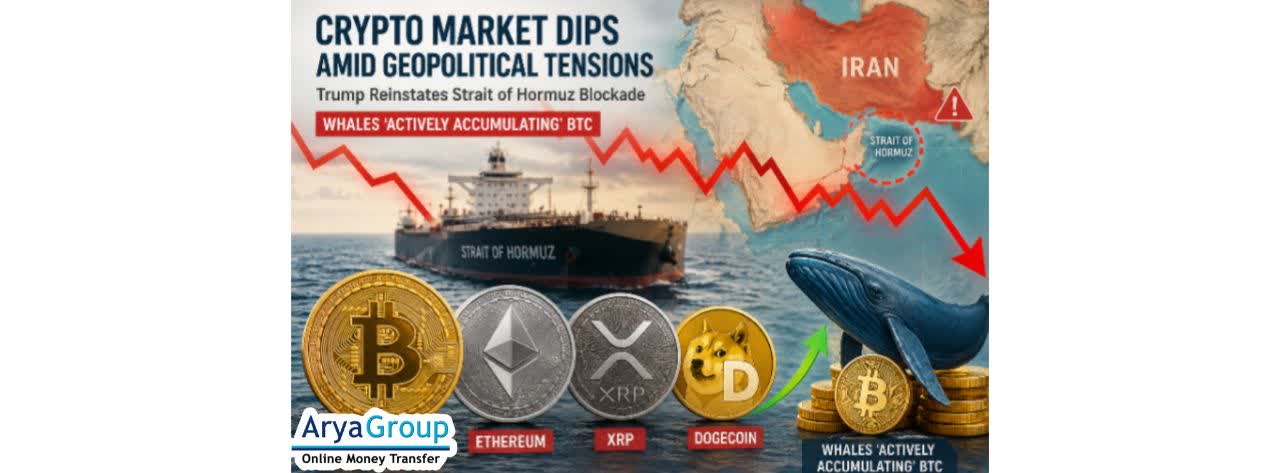
The cryptocurrency market experienced renewed selling pressure as Bitcoin, Ethereum, XRP, and Dogecoin all declined following heightened geopolitical uncertainty linked to the Strait of Hormuz. Investors reacted cautiously after President Donald Trump announced plans to restore a U.S.-led blockade in the strategic waterway, raising concerns about global energy supplies, inflation, and the outlook for financial markets. Despite the market decline, blockchain data indicates that large Bitcoin holders, commonly known as whales, continued accumulating Bitcoin, suggesting that some long-term investors view the recent weakness as a buying opportunity rather than the beginning of a prolonged downturn. The Strait of Hormuz is one of the world's most important energy shipping routes, with a significant portion of global oil exports passing through it every day. Any disruption to traffic in this region has the potential to increase oil prices and create broader economic uncertainty. As fears of supply disruptions intensified, financial markets became more risk-averse, leading to declines across equities, cryptocurrencies, and other speculative assets. Rising oil prices also revived concerns that inflation could remain elevated for longer than expected, potentially delaying interest rate cuts by major central banks. Bitcoin fell alongside other major cryptocurrencies as investors temporarily reduced exposure to risk assets. Ethereum, XRP, and Dogecoin also posted losses as broader market sentiment weakened. Such synchronized declines are common during periods of geopolitical uncertainty because investors often shift capital toward safer assets until conditions become clearer. Although digital assets have developed into a more mature investment class, they remain sensitive to major global economic and political events. Despite the short-term weakness, on-chain analysts reported that Bitcoin whales continued purchasing substantial amounts of BTC. Whale accumulation refers to large-scale buying by investors or institutions holding significant Bitcoin reserves. Historically, sustained accumulation by these large holders has often occurred during periods of market uncertainty, reflecting confidence in Bitcoin's long-term value rather than concern over temporary price declines. According to market analysts, current blockchain activity suggests that experienced investors are steadily increasing their positions while retail sentiment remains cautious. Whale buying attracts considerable attention because these investors typically manage substantial capital and often follow long-term investment strategies. When whales consistently accumulate Bitcoin during market corrections, analysts frequently interpret it as a sign that sophisticated investors expect stronger prices in future market cycles. While whale activity does not guarantee price appreciation, it remains one of the most closely monitored on-chain indicators within the cryptocurrency industry. Another important factor affecting market sentiment is monetary policy. Rising oil prices increase the risk of persistent inflation, which could encourage central banks to keep interest rates elevated for a longer period. Higher borrowing costs generally reduce liquidity across financial markets and make risk-sensitive investments such as cryptocurrencies less attractive in the short term. Investors therefore continue monitoring inflation reports and central bank announcements alongside geopolitical developments. Institutional investors are also approaching the market with increased caution. Rather than focusing exclusively on cryptocurrency fundamentals, large investment firms now evaluate digital assets within the context of broader macroeconomic conditions. Inflation trends, energy markets, interest rate expectations, and geopolitical risks all influence portfolio allocation decisions.
This growing integration with traditional financial markets means Bitcoin and other cryptocurrencies increasingly react to global economic news. Although Bitcoin declined with the broader market, many analysts believe the ongoing accumulation by whales reflects continued confidence in the asset's long-term fundamentals. Bitcoin's fixed supply, expanding institutional adoption, growing recognition as a digital store of value, and increasing integration into global investment portfolios remain key factors supporting long-term demand. Temporary market corrections have historically occurred even during broader bullish cycles. Ethereum continues benefiting from its leadership in decentralized finance, smart contracts, and tokenized assets, while XRP remains closely linked to cross-border payment innovation. Dogecoin, despite being one of the market's most recognizable meme-based cryptocurrencies, also tends to experience higher volatility during periods of broader market uncertainty. As a result, all major cryptocurrencies often move together when macroeconomic risks dominate investor sentiment. Looking ahead, investors will closely monitor developments surrounding the Strait of Hormuz, global oil prices, inflation data, and future monetary policy decisions. Any easing of geopolitical tensions could improve confidence across financial markets and support a recovery in cryptocurrency prices. Conversely, continued escalation or higher inflation could prolong short-term volatility. Overall, the latest market decline highlights how closely cryptocurrencies have become connected to global economic events. While geopolitical uncertainty temporarily weighed on Bitcoin, Ethereum, XRP, and Dogecoin, continued accumulation by large Bitcoin holders suggests that some experienced investors remain optimistic about the long-term outlook. As global financial conditions evolve, the interaction between macroeconomic events and blockchain fundamentals will continue shaping the direction of the cryptocurrency market.
Add New Comment